You Won’t Believe the Art Hiding in Galle’s Ancient Streets
Walking through Galle, Sri Lanka, feels like stepping into a living canvas. Colonial walls whisper stories, while vibrant murals and local studios breathe modern life into ancient stone. I didn’t expect to find such a powerful fusion of history and creativity. From street art to centuries-old craftsmanship, Galle’s cultural heartbeat pulses through its art. This isn’t just sightseeing—it’s soul-stirring. Let me take you where tradition paints the town.
The First Glimpse: Galle Fort as a Living Art Scene
Entering Galle Fort through the massive seaward gate at dawn, the golden light spills across the weathered coral walls, casting long shadows that stretch like brushstrokes across the cobblestones. The air carries a salty breeze, mingling with the scent of frangipani and old stone. This UNESCO World Heritage site, originally fortified by the Portuguese in the 16th century and later expanded by the Dutch, stands as a masterpiece of colonial architecture fused with tropical resilience. But beyond its military history, Galle Fort today reveals itself as an open-air gallery where every turn offers a new visual narrative.
The architecture itself is a form of art—low-slung buildings with sloping roofs, shuttered windows painted in ochre, teal, and terracotta, and intricate ironwork that speaks of craftsmanship passed down through generations. Time has softened the edges, and the tropical climate has left its mark: vines creep up walls, moss gathers in stone crevices, and paint peels in elegant layers. Yet this decay does not signal neglect—it enhances the aesthetic, giving the fort a lived-in authenticity that feels deeply human. The fusion of preservation and natural transformation creates a visual poetry that no museum could replicate.
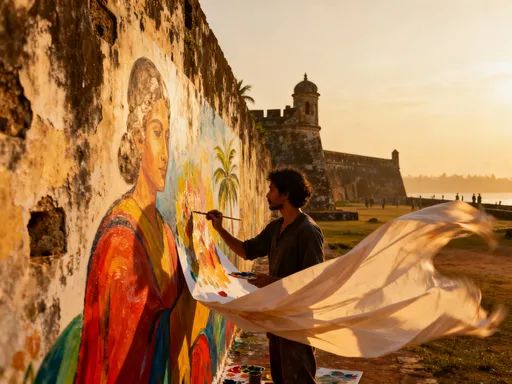
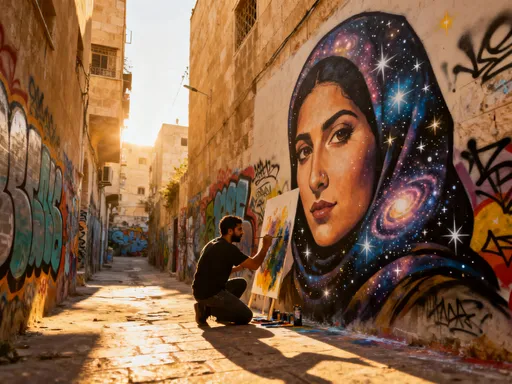
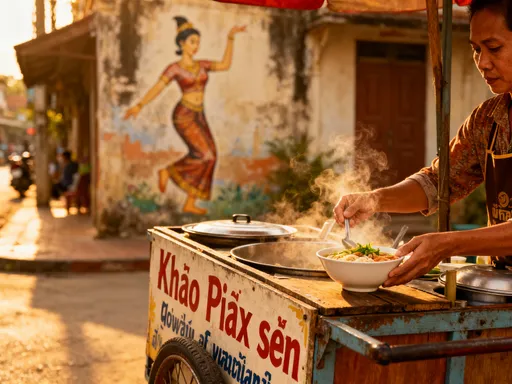
But the real surprise begins around the corners. Graffiti tags in elegant script, stencil art of local birds, and mosaic fragments embedded in alleyways reveal a contemporary pulse beneath the historic surface. These artistic interventions are not acts of vandalism but carefully curated expressions. Since the restoration efforts following the 2004 Indian Ocean tsunami, Galle Fort has become a sanctuary for artists seeking inspiration in history and community. The fort’s survival through disaster has imbued it with symbolic strength, making it a natural canvas for stories of resilience, identity, and renewal.
Local artists and visiting creatives alike have embraced the space, using blank walls as platforms for cultural dialogue. What makes this transformation remarkable is its organic nature—there are no formal permissions required for many of these works, yet the community maintains a shared respect for the space. The result is a living, evolving exhibition where art is not confined to galleries but integrated into daily life. This seamless blend of past and present makes Galle Fort not just a monument, but a breathing, creative entity.
Art Beyond the Walls: Cultural Activities That Bring Tradition to Life
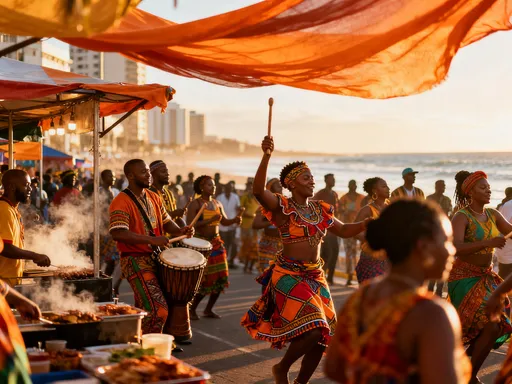
While the fort’s architecture and street art capture the eye, Galle’s deeper artistic soul is revealed through its living traditions. Throughout the week, cultural performances unfold in unexpected places—a traditional Kandyan dance in a sunlit courtyard, a drumming circle beneath a banyan tree, or a storytelling session in a restored colonial hall. These events are not staged for tourists alone; they are part of a continuous thread of cultural expression that binds the community. Visitors who pause to watch often find themselves drawn into conversation, invited to try a rhythm on the drum or learn a simple dance step.
One of the most enduring art forms on display is mask carving, a craft with roots in healing rituals and folk theater. Though the village of Ambalangoda, about 30 minutes north, is most famous for this tradition, Galle hosts regular demonstrations by master carvers who bring their tools and raw wood to open-air workshops. Watching a block of kaduru wood transform into a demon king or a comic villager is mesmerizing—the chisel bites deep, the eyes emerge with fierce expression, and the final paint adds layers of symbolic meaning. Each mask is not merely decorative; it is a vessel of story and spirit, used in exorcism rituals and dance dramas that have been performed for centuries.
Batik-making is another tactile tradition thriving in Galle’s creative ecosystem. Small studios tucked into quiet lanes offer hands-on sessions where travelers can design their own fabric using hot wax and natural dyes. The process is meditative: drawing freehand patterns, applying wax to resist dye, then submerging the cloth in vibrant indigo, madder red, or turmeric yellow. The wax cracks during dyeing, creating the signature ‘crackle’ effect that makes each piece unique. More than a craft, batik is a metaphor for imperfection and beauty—flaws are not hidden but celebrated.
What ties these traditions together is the way they are lived, not preserved behind glass. Artisans speak with pride about passing skills to their children, and many emphasize that their work is not just a livelihood but a duty to memory. In conversations over spiced tea, they share how colonial suppression once threatened these practices, yet they survived in homes and temples. Today, with renewed interest from locals and visitors, these traditions are not only surviving—they are evolving. The art is no longer confined to ritual; it is being reimagined in modern fashion, home décor, and public installations, ensuring its relevance for future generations.
Hidden Galleries and Independent Studios You’ve Never Heard Of
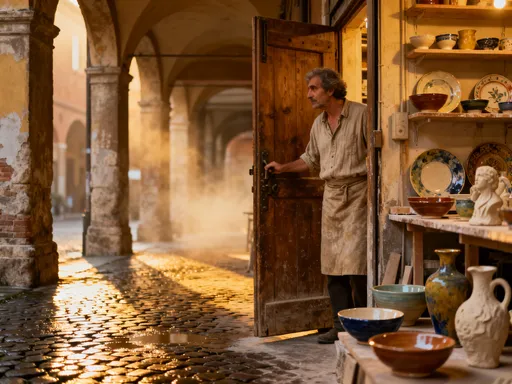
Beyond the main thoroughfares of Church Street and Pedlar Street, Galle’s artistic heartbeat quickens in its hidden corners. Tucked inside restored Dutch-era bungalows with tiled roofs and arched doorways, a network of small, independent galleries thrives. These spaces are not commercial hubs with glossy brochures, but intimate rooms where art is displayed with care and conversation flows freely. Many are run by families who have lived in Galle for generations, turning ancestral homes into creative sanctuaries.
One such studio, nestled down a narrow lane near the old lighthouse, features the work of a third-generation painter who uses reclaimed sari silk and fishing nets as canvases. His abstract compositions blend ocean blues with earthy ochres, evoking both the sea and the soil of southern Sri Lanka. Another gallery, housed in a former spice warehouse, showcases sculptors who transform driftwood, broken ceramics, and discarded metal into powerful figurative works. These artists are not chasing global fame; they are responding to place, memory, and the textures of everyday life.
What sets these spaces apart is their commitment to nurturing emerging talent without commercial pressure. Unlike larger galleries that cater to international collectors, these studios often operate on a cooperative model—artists share space, materials, and even exhibition costs. Some host monthly ‘open studio’ nights where visitors can meet creators, watch live demonstrations, and purchase directly. This direct connection fosters trust and deepens appreciation; buyers don’t just take home a piece of art—they carry a story.
Finding these hidden gems requires curiosity and a willingness to wander. The best approach is to follow the alleys that branch off the main streets, especially in the quieter northern and eastern sections of the fort. Asking at local cafés or bookshops often yields the most authentic leads—staff may point you to a weekend pop-up exhibition or a private artist’s home studio that’s open by appointment. These discoveries feel personal, like being let in on a secret. And in a world of crowded tourist trails, that sense of intimacy is priceless.
Street Art with a Story: Murals That Reflect Galle’s Soul
While galleries preserve art indoors, Galle’s streets tell their own stories through large-scale murals that transform blank walls into emotional landmarks. One of the most moving is a mural on the side of a former post office building, depicting a lone fisherman casting his net at sunrise. Painted in soft gradients of orange and grey, the image captures both solitude and dignity. Locals say it honors the generations of men who have braved the Indian Ocean, many of whom lost their lives in the 2004 tsunami. The mural does not dramatize tragedy; instead, it celebrates continuity—the daily return to the sea, the quiet courage of ordinary life.
Another powerful piece, near a small schoolyard, shows a barefoot child reading under a streetlamp, surrounded by floating books and stars. Created by an international artist during a residency program, the mural was inspired by conversations with students about dreams and education. The message is clear: knowledge is light, and every child carries a universe within. Unlike decorative graffiti, this art carries intention—it was developed in collaboration with teachers and parents, ensuring it resonates with the community it adorns.
These murals are more than aesthetic enhancements; they are acts of remembrance, hope, and identity. Many were created in the years following the tsunami, a period when Galle began rebuilding not just buildings but spirit. Artists from Sri Lanka and abroad were invited to contribute, resulting in a visual dialogue about loss, recovery, and resilience. Some murals incorporate traditional motifs—peacocks, lotus flowers, temple carvings—while others use modern symbols like bicycles, mobile phones, or schoolbags, reflecting the changing face of Sri Lankan life.
What makes these works so impactful is their accessibility. Unlike museum art, which often requires admission and context, street murals meet people where they are—on their way to work, walking a child to school, sipping tea at a sidewalk table. They invite pause, reflection, even conversation. A mother might point to the reading child and say, ‘That could be you.’ A tourist might stop to photograph the fisherman and later learn his story. In this way, the murals do more than decorate—they connect, educate, and heal.
Where to Create: Hands-On Art Experiences for Travelers
For those who wish to move beyond observation, Galle offers meaningful opportunities to create. Several studios and cultural centers provide hands-on workshops that allow visitors to engage directly with local art forms. One of the most popular is pottery, taught by a collective of artisans who use clay sourced from nearby riverbeds. In a shaded courtyard surrounded by banana trees, participants learn to shape vessels on a kick wheel, guided by gentle hands and patient instruction. The experience is grounding—there is something deeply calming about working with earth, feeling its coolness, its resistance, its potential.
Batik workshops are equally immersive. A typical session begins with a brief history of the craft, followed by a demonstration of traditional tools—the copper pen, the beeswax, the dye vats. Participants then sketch their own design, often inspired by nature: a palm frond, a fish, a lotus bloom. The wax application is delicate work, requiring focus and a steady hand. Once the wax dries, the fabric is dipped into dye, and the transformation begins. After rinsing and boiling to remove the wax, the final piece emerges—colorful, textured, deeply personal. Many travelers describe the moment of revelation as emotional; they are not just making art, but participating in a centuries-old ritual.
Other workshops include traditional drum-making, where visitors help assemble a small hand drum using cured leather and wood, and natural pigment painting, which uses minerals and plants to create paint. These sessions are not rushed; they unfold over two to three hours, allowing time for conversation, mistakes, and laughter. The emphasis is not on perfection but on presence. By the end, participants leave with more than a souvenir—they carry a memory of creation, a tactile connection to a culture.
Practically speaking, most workshops are located within or just outside the fort, easily reachable on foot or by bicycle. Prices range from 2,500 to 6,000 Sri Lankan rupees (approximately $8–$20 USD), making them accessible to most travelers. Booking in advance is recommended, especially during peak season, and many studios offer private or family sessions. For those traveling with children, these workshops provide a meaningful alternative to passive sightseeing—engaging young minds through creativity and cultural exchange.
Art-Inspired Dining and Spaces That Elevate the Experience
Art in Galle extends beyond galleries and studios—it permeates the spaces where people gather to eat, drink, and reflect. Several cafés and restaurants have transformed colonial buildings into immersive environments where design and cuisine intertwine. One popular spot, housed in a former Dutch warehouse, features whitewashed walls adorned with rotating exhibitions of local photography and abstract painting. Tables are made from repurposed teak, and lanterns crafted from recycled glass cast a warm glow in the evenings. The ambiance invites lingering, sketching, or journaling—a rare luxury in today’s fast-paced travel culture.
The menus at these establishments often reflect the artistic theme. Dishes are named after paintings or artists—‘The Kandyan Red’ for a spicy coconut curry, ‘Van Gogh’s Garden’ for a salad with edible flowers. Some chefs collaborate with local artists to design plating styles that resemble miniature artworks. Even the coffee is served with care—a latte might be topped with a delicate fern pattern, echoing the tropical foliage outside. These touches are not gimmicks; they reflect a philosophy that food, like art, is an expression of culture and care.
For travelers seeking quiet inspiration, these spaces offer sanctuary. A corner table by a window, a sketchbook, and a cup of Ceylon tea can spark unexpected creativity. Some cafés even host weekly poetry readings or acoustic music nights, further blurring the line between dining and cultural engagement. The experience is not about luxury or extravagance, but about mindfulness—savoring flavor, light, texture, and conversation.
Importantly, these venues maintain authenticity. They do not cater solely to tourists; locals frequent them for morning coffee or weekend brunch. This balance ensures that the art and food remain rooted in community, not performance. Visitors are not spectators but participants, welcomed into a rhythm of life that values beauty, simplicity, and connection.
Why Galle’s Art Scene Is a Model for Sustainable Cultural Tourism
Galle’s artistic renaissance offers a powerful example of how cultural tourism can thrive without sacrificing authenticity. Unlike destinations that commercialize heritage into clichéd souvenirs and staged performances, Galle has cultivated a model where art supports preservation, and tourism supports artists. The result is a dynamic equilibrium—history is honored, creativity is nurtured, and the local economy benefits without erasure.
Community involvement is central to this success. Cooperatives of artisans, often organized by women, manage batik and craft collectives, ensuring fair wages and skill development. School programs introduce children to traditional arts, fostering pride and continuity. Public and private funding supports mural projects and restoration efforts, with strict guidelines to protect the fort’s structural and cultural integrity. These systems ensure that growth is inclusive, not extractive.
For other historic cities grappling with the pressures of modernization and tourism, Galle offers valuable lessons. It shows that preservation does not mean freezing time, but allowing evolution with respect. Art becomes the bridge—honoring the past while inviting innovation. When visitors engage with a mural, attend a dance performance, or paint their own batik, they are not consuming culture; they are contributing to its vitality.
Ultimately, Galle’s art scene reminds us that culture is not a relic, but a living practice. It thrives in the hands of carvers, the strokes of painters, the rhythms of dancers, and the quiet moments when a traveler pauses to listen. By choosing to engage mindfully, visitors do more than see a destination—they become part of its ongoing story. This is the essence of meaningful travel: not to take, but to connect, to honor, and to leave with a deeper understanding of what it means to create and belong.
Galle doesn’t just display art—it lives it. Every corner offers a dialogue between old and new, local and global. By choosing to engage with its cultural activities, travelers do more than explore; they become part of a continuing story. This is what mindful travel looks like: deep, respectful, and unexpectedly moving. If you seek beauty with meaning, Galle’s painted streets are calling.